
Preparing for 2027: positive safeguarding oversight for independent school governors in Scotland
By Sarah Sinclair, Head of Professional Learning for the Scottish Council of Independent Schools
Governors have an exciting opportunity to celebrate best practice and help their schools prepare confidently for the new HMIE Inspection Framework coming in 2027.
Strong governor oversight helps safeguarding remain visible, purposeful and firmly connected to each school’s values. By asking thoughtful questions, reviewing evidence and maintaining a clear line of sight from policy to daily practice, boards can support continuous improvement and enter the 2027 inspection cycle with confidence.
The Scottish Council of Independent Schools provides ongoing support to the sector, helping governors understand the safeguarding regulatory landscape and translate the expectations of the Office of the Scottish Charity Regulator (OSCR), His Majesty’s Inspectorate of Education (HMIE) and the Care Inspectorate into effective oversight.
At our annual Governors’ Conference in Dundee, I shared practical ways in which members can strengthen oversight, support their school communities and prepare positively for the expectations of the new Inspection Framework in 2027.
A stronger platform for 2027
The Charities (Regulation and Administration) (Scotland) Act 2023 significantly updated the 2005 Act, with changes phased in between 2024 and early 2026 which have direct implications for how independent school boards address safeguarding issues.
Over that period new inquiry powers have been rolled out, allowing OSCR to investigate former charities and trustees and to close gaps that previously existed. Under its remit, the charities regulator can issue both negative and positive directions, suspend or remove governors, appoint interim governors, and in serious cases petition the Court of Session.
As a result of new trustee information requirements – introduced last March – charities have a duty to keep governor details up to date in OSCR Online and it recommends maintaining at least two OSCR Online users for continuity.
Together, these changes give boards a clear platform for reviewing their arrangements, demonstrating effective oversight and showing how safeguarding contributes to a positive school culture.
Practical steps to build inspection readiness
Governors can build assurance through a series of practical steps that connect board oversight with everyday experience in school. This evidence-led approach will support constructive conversations during inspection visits and help boards demonstrate their impact.
As a governor, you should be aware of your duties under charity law and understand how your role relates to safeguarding in your school.
Your statutory duties include a requirement for Disclosure Scotland checks to be made, to ensure that all teachers are registered with the General Teaching Council for Scotland (GTCS) and that all staff and governors complete PVG scheme membership.
You must be trained in safeguarding and the school must have adequate, annually updated policies and procedures in place – including a child protection policy – that are tailored to your school’s activities and that reflect national guidance, the law and best practice.
All staff and volunteers must receive safeguarding training, helping them to understand properly what constitutes abuse, how to spot it, how to respond to concerns, and who to report to. Lines of accountability, systems of reporting, and actions to be taken must be clear and understood, and all concerns reported should be appropriately and sensitively investigated and acted upon.
Best practice must be embedded in an overarching safeguarding culture within your school, the key themes of which are woven into its daily operation, creating an environment where whistleblowers – or anyone with a concern – feels able to report it immediately. The school’s safeguarding culture should include an ability, when things go wrong, to reflect and learn from mistakes and to make changes accordingly.
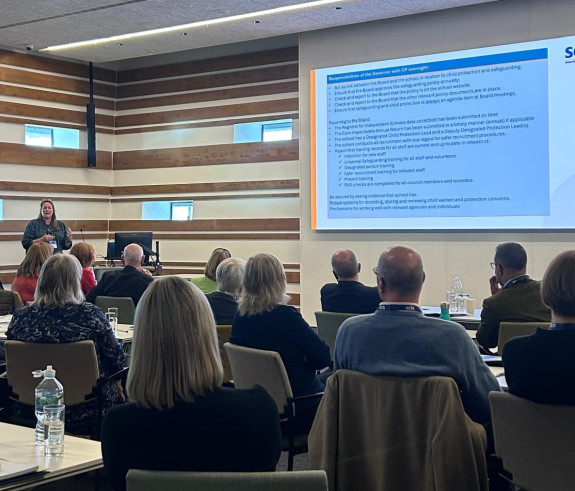
Championing oversight through a Designated Safeguarding Governor
While all governors share collective responsibility, your board could appoint a Designated Safeguarding Governor, or ‘governor with responsibility for child protection’ to lead oversight.
This governor will act as a link between the board and the school on safeguarding matters, reviewing school policies, and meeting regularly with the child protection lead, pastoral lead, and HR manager. They will also have a duty to report to the board on compliance matters and to ensure that all governors have completed PVG checks.
Showing impact: evidence boards can bring together
A well-prepared board can clearly demonstrate how its oversight supports pupils and staff. Useful evidence includes training records, PVG checks, published policies, and confirmation that the designated child protection lead and deputy have completed appropriate training.
It should be able to evidence safe, and consistently applied, recruitment procedures, including for senior leadership appointments, as well as clear systems for recording, storing, and reviewing child welfare concerns, and effective mechanisms for working with relevant agencies.
In readiness for the 2027 Inspection Framework, boards can use the following questions to structure constructive challenge and discussion:
- Is safeguarding represented within our school’s development plan? What are the key priorities this year, and what impact are they having?
- Are entrance and exit points safe and secure? What happens if a pupil absconds or arrives late?
- Can staff and pupils explain how safeguarding policies work in practice? Do our pupils know who to talk to and how to identify authorised visitors?
- How has training improved safeguarding practice? What practical changes have resulted?
- How is the Safer Recruitment Policy implemented when recruiting staff? Can the board demonstrate compliance when appointing senior leaders?
- Are our staff records – including for leavers – properly maintained and accessible?
The move towards the new HMIE inspection framework in 2027 is an opportunity for governors to make their oversight more visible, connected and impactful. By reviewing evidence regularly, listening to the school community and asking focused questions, boards can demonstrate confident leadership and help safeguarding practice continue to grow.


